 listicle
Best Gold Trading Platform: 7 Top Picks for 2026
Last Updated: October 23, 2026
Quick Summary
SonicAi Gold is our top pick for the best gold trading platform in 2026, mirroring automated XAU/USD trades into your MetaTrader 5 account with performance verified on MyFXBook. It reports 18 consecutive winning months, an 80% win rate, and less than 1% drawdown.
- We scored platforms on trading costs, execution, platforms, leverage, regulation, and instrument range.
- FP Markets earned a top gold broker nod from DailyForex for 2026 on its raw XAU/USD pricing.
- FOREX.com describes its precious metals offering as unleveraged, limiting exposure to what you deposit.
- Interactive Brokers was named the best gold trading platform pick in ForexBrokers.com's 2026 comparison.
- In our worked example, the commission model was cheaper by roughly $26 per month at 20 round-trip trades.
Table of Contents
- What Makes a Gold Trading Platform Worth Your Money
- 1. SonicAi Gold: Automated XAU/USD Copy Trading
- 2. FP Markets: Raw Spreads and Multi-Platform Access
- 3. FOREX.com: Unleveraged Precious Metals Exposure
- 4. Vantage: Mobile-First Gold Trading App
- 5. Interactive Brokers: Best for Established Brokerage
- 6. VT Markets: Education-Led Platform Selection
- 7. PU Prime and Futures Brokers: Spread vs Commission Models
- The Bottom Line on Choosing a Gold Trading Platform
- Frequently Asked Questions
What Makes a Gold Trading Platform Worth Your Money
Choosing the best gold trading platform in 2026 comes down to one question: does it give you reliable XAU/USD access at an all-in cost that leaves room for profit? For a transparent breakdown of the fees you'll actually pay, see Sonic AI fees explained.
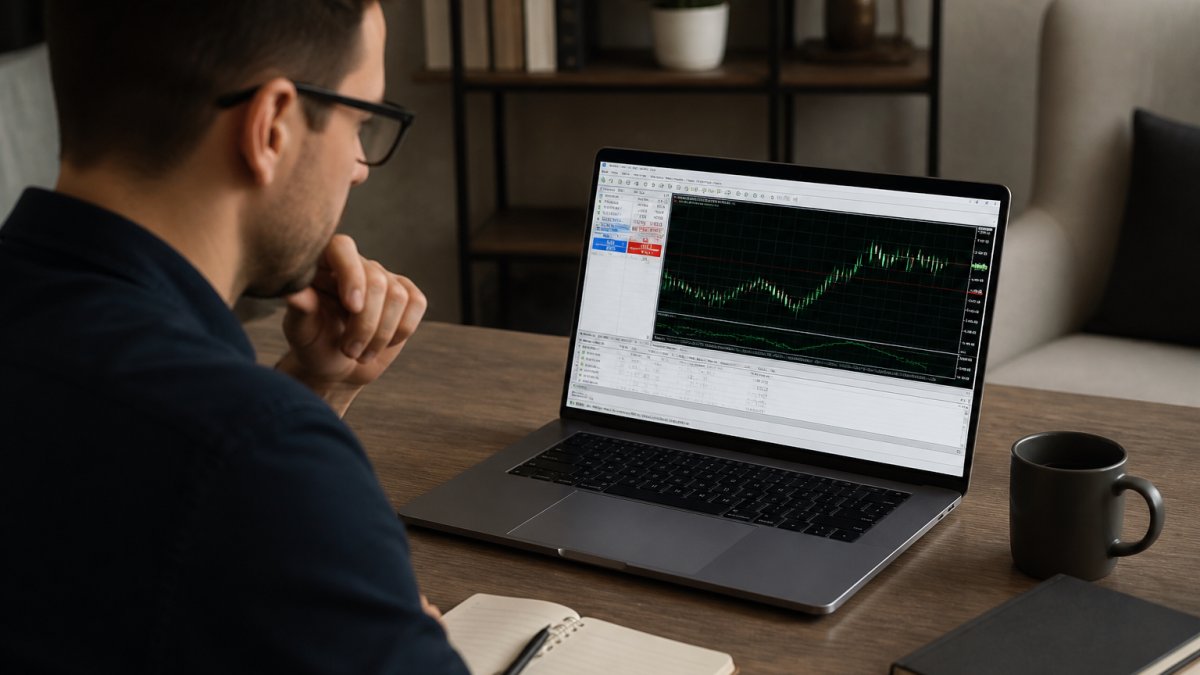
Gold trading is speculating on the gold price without taking physical delivery, via spot gold, gold CFDs, or gold futures. Owning vaulted physical gold involves custody, storage, and delivery; trading price exposure involves counterparty risk, margin, and financing. This guide focuses on price exposure.
The 6 Criteria We Used to Rank These Platforms
We scored every platform on six factors: trading costs, execution speed and slippage, platform and app availability, leverage and margin terms, regulation and client protection, and instrument range. Cost matters most for active traders; regulation matters most for overnight holders.
| Criterion | What We Check | Why It Matters |
|---|---|---|
| Trading costs | Spread, commission, swaps | Directly cuts into every trade |
| Execution | Speed, slippage, order types | Determines your real fill price |
| Platforms | Desktop, web, mobile, MT4/MT5 | Fits your workflow |
| Leverage and margin | Ratios, margin calls | Controls risk exposure |
| Regulation | Oversight, client protection | Protects your capital |
| Instruments | Spot, CFD, futures, vaulted metal | Matches your strategy |
How We Tested (and What We Could Not Verify)
Most "best platform" lists publish a ranking without explaining how they got there. Here is our methodology, including its limits.
- Cost sampling. We compared published spread and commission schedules where available, and flag brokers that did not publish live pricing. XAU/USD spreads widen around data releases and rollover, so a single quoted number is only a starting point.
- Execution and order types. We checked supported order types (market, limit, stop, stop-limit, trailing stop) and depth-of-market access. We did not run live slippage tests across all brokers; unverified claims are flagged.
- Platform and app availability. We confirmed which terminals each broker lists, MT4, MT5, cTrader, TradingView, proprietary web and mobile apps, because platform choice often decides whether a strategy is possible.
Drawdown is the criterion most traders underestimate. A platform that lets you size positions carelessly will hurt you more than a slightly wider spread ever will. If that's your weak spot, our guide on how to manage drawdown in XAUUSD covers the practical side.
1. SonicAi Gold: Automated XAU/USD Copy Trading
SonicAi Gold is our top pick for busy professionals who want gold exposure without watching charts all day.
That combination is unusual in automated gold trading; most copy strategies look strong in backtests and fall apart in live volatility. To check those numbers yourself, learn how to read a Myfxbook track record line by line before you commit.
Setup is straightforward for anyone who can install MT5. If you're new to the terminal, our step-by-step guide on automated copy trading for gold walks through linking your account, and the Sonic AI Gold tutorial videos cover setup, deposit, and withdrawal.
Pros:
- Independently verified performance on MyFXBook
- Fully automated execution on MetaTrader 5
- Low drawdown relative to typical gold strategies
Cons:
- Requires an MT5 account and broker connection
- Past performance does not guarantee future results
2. FP Markets: Raw Spreads and Multi-Platform Access
FP Markets earned a top gold broker nod from DailyForex for 2026, largely on its raw XAU/USD pricing. It supports MetaTrader 4, MetaTrader 5, and cTrader, giving genuine choice over execution.
For traders running automated gold trading strategies, MT5 support is the deciding factor here: it handles expert advisors natively, and cTrader suits anyone who prefers depth-of-market visibility. Account minimums and fee schedules aren't published in the sources we reviewed, so confirm them directly before funding.
Pros:
- Raw XAU/USD pricing model
- Three platform options including MT4 and MT5
Cons:
- Commission structure requires careful cost comparison
- Fee details not confirmed in our sources
3. FOREX.com: Unleveraged Precious Metals Exposure
FOREX.com stands out for one reason: it describes its precious metals offering as unleveraged. Leverage amplifies both gains and losses, and gold's volatility can wipe out a leveraged account fast.
The service covers both gold and silver through its own platforms. Spreads, commissions, and account minimums aren't specified in the sources we reviewed, so treat cost as an open question until you check the live schedule.
Pros:
- Unleveraged gold and silver trading
- Access through established trading platforms
Cons:
- Cost structure not confirmed in our sources
- Fewer third-party platform options
4. Vantage: Mobile-First Gold Trading App
Vantage suits traders who execute from a phone, with the Vantage App, Vantage Web Trading, MetaTrader 4, MetaTrader 5, and TradingView.
Mobile trading has a real tradeoff: convenience against screen real estate. Order entry on a phone is slower, and that costs money when gold moves quickly. Use the app for monitoring and the desktop terminal for execution if you trade actively.
Pros:
- Broad platform choice including TradingView
- Strong mobile and web options
Cons:
- Spreads and minimum deposits not verified in our sources
- Mobile execution slower for fast markets
5. Interactive Brokers: Best for Established Brokerage
Interactive Brokers was named the best gold trading platform pick in ForexBrokers.com's 2026 comparison. The appeal is institutional-grade infrastructure and a long operating history rather than gold-specific features; traders already holding equities or futures there get consolidated reporting across asset classes.
The catch: the sources we reviewed don't detail its gold instruments, platform features, or fee schedule. Established brokerage accounts also tend to carry more onboarding friction than a straightforward CFD account.
Pros:
- Recognized as a leading pick in a 2026 comparison
- Established, multi-asset brokerage
Cons:
- Gold-specific features not detailed in our sources
- Heavier account opening process
6. VT Markets: Education-Led Platform Selection
VT Markets publishes a guide covering XAU/USD platform selection, costs, regulation, demo accounts, and strategies, useful if you're still deciding what you need. A demo account is the cheapest way to test execution quality before risking capital.
The guide addresses the practical questions most broker pages skip. What it doesn't do, in the sources we reviewed, is confirm specific account pricing or platform capabilities. Use the education, verify the numbers.
Pros:
- Practical guidance on platform selection
- Explicit XAU/USD coverage and demo access discussion
Cons:
- Account pricing not verified in our sources
- Platform capabilities unconfirmed
7. PU Prime and Futures Brokers: Spread vs Commission Models
PU Prime appears in comparisons organized around gold spreads and the two dominant pricing models: spread-only and spread-plus-commission. The difference only becomes real when you run your own volume through both structures.
Spread-Only vs Spread-Plus-Commission: A Worked Example
Spread-only accounts bury the cost in the quote; commission accounts show it separately, usually with tighter raw spreads. High-volume traders generally come out ahead on commission models.
Consider a hypothetical trader who executes 20 round-trip XAU/USD trades per month at 0.10 lots each (10 ounces per trade, 200 ounces per month). Suppose a spread-only account quotes a 35-cent spread and a raw account quotes a 15-cent spread plus a $7 round-trip commission per lot.
- Spread-only cost: 35 cents × 200 ounces = $70 per month in spread.
- Raw + commission cost: 15 cents × 200 ounces = $30 in spread, plus 20 trades × 0.10 lots × $7 = $14 in commission, for $44 total.
Here the commission model is cheaper by roughly $26 per month. At 5 round-trip trades per month, the raw account costs $7.50 in spread plus $3.50 in commission ($11) versus $17.50 spread-only, still cheaper on raw, but the gap shrinks.
Costs Competitors Often Leave Out
Spread and commission are only part of the all-in cost. Three others matter for gold specifically:
- Overnight financing (swaps). Gold CFDs are typically financed daily. If you hold a position for weeks, financing can exceed your spread cost. Ask for the current swap rate on both long and short XAU/USD before you commit.
- Currency conversion. If your account is funded in one currency and gold is quoted in another, conversion fees apply on entry and exit. For non-USD traders this can be a meaningful hidden cost.
- Custody and delivery (physical metal). If you are comparing a vaulted physical gold product against a CFD, storage and insurance fees belong in the comparison. They are not trading costs, but they are real costs of ownership.
Futures: Exchange Pricing and Different Rules
Futures brokers like Plus500 Futures and AMP Futures serve a different need. Gold futures trade on exchanges such as COMEX with standardized contracts, fixed tick values, and defined hours, transparent, exchange-regulated pricing rather than an over-the-counter CFD quote. Futures carry their own margin requirements and rollover considerations, so understand contract specs before entering a position.
| Model | Cost Visibility | Best For |
|---|---|---|
| Spread-only | Cost built into quote | Lower-volume traders |
| Spread + commission | Cost itemized | High-volume traders |
| Futures | Exchange-set, fixed tick | Rule-based strategies |
Pros:
- Clear framework for comparing cost models
- Futures offer exchange-level transparency
Cons:
- Specific spread and commission figures not published in our sources
- Futures require larger account sizes and margin knowledge
Risk Management for Volatile Gold Markets
Cost is only half the decision. Gold can gap overnight on geopolitical news, central-bank commentary, and inflation data, and leverage turns a manageable move into an account-ending one. A few rules apply regardless of cost model:
- Size positions by risk, not by margin. Decide the maximum you are willing to lose on a trade (a common approach is a small fixed percentage of account equity) and work backward to lot size. Margin is what the broker requires; risk is what you choose.
- Use stop orders, and understand gap risk. A stop order becomes a market order when triggered, so in a fast market your fill can be worse than the stop price. Stops limit losses in normal conditions; they do not eliminate gap risk.
- Respect event risk. Spreads widen and liquidity thins around major releases. If you hold through them, expect wider effective costs and larger slippage.
The Bottom Line on Choosing a Gold Trading Platform
Gold's volatility rewards preparation and punishes guesswork. Match the platform to your behavior: if you can't watch charts during the day, automation like SonicAi Gold's verified MT5 mirroring removes that problem.
Whichever route you take, verify performance claims independently, test on a demo account first, and size positions so a bad week doesn't end your account.
The hardest part of gold trading isn't picking a platform, it's staying consistent when volatility spikes and instinct says to intervene.
Frequently Asked Questions
Which broker is best for trading gold?
There is no single best broker for everyone. FP Markets offers raw XAU/USD pricing and MetaTrader 4/5 plus cTrader, according to DailyForex. FOREX.com provides unleveraged precious metals exposure. Interactive Brokers was named best gold trading platform by ForexBrokers.com for 2026. For automated strategies, SonicAi Gold mirrors XAU/USD trades into your MetaTrader 5 account, with performance independently verified on MyFXBook. Match the broker to your trading style, platform preference, and cost tolerance.
What are the key features to look for in a gold trading platform?
Prioritize execution speed and order types, because gold can move fast during volatility. Check XAU/USD trading spreads and commissions, platform availability (MetaTrader 4, MetaTrader 5, cTrader, mobile and web), leverage and margin terms, and regulation with client protection. For automated gold trading strategies, verify third-party performance tracking like MyFXBook rather than relying on backtests. A demo account lets you test execution quality before committing real capital.
Is it better to trade gold via CFDs or physical gold?
They serve different purposes. Physical gold means you own vaulted metal, with storage and insurance costs and no leverage. Gold CFDs and XAU/USD give you price exposure without owning metal, often with leverage and margin requirements. CFDs suit active trading and automated strategies; physical gold suits long-term holding. Neither is universally better. Decide whether you want ownership or price exposure, then check the total cost including overnight financing for CFDs.
How do I choose a regulated broker for gold trading?
Check which regulator supervises the broker in your jurisdiction and what client protection applies, such as segregated funds or compensation schemes. Regulation varies by country, so verify the entity that will hold your account, not just the brand name. Confirm the broker offers XAU/USD with transparent spreads and commissions, and test execution on a demo account. For automated systems, ask for independently verified track records on MyFXBook or similar before trusting any performance claims.
How does automated copy-trading work for XAU/USD?
Automated copy-trading mirrors trades from a strategy provider into your own MetaTrader 5 account. You connect your account, set a risk allocation, and the system executes XAU/USD trades proportionally. SonicAi Gold reports 18 consecutive winning months, an 80% win rate, and less than 1% drawdown, independently verified on MyFXBook. You keep control of your account and can adjust or stop copying at any time. Always review the strategy's live verified history, not just backtests, before allocating capital.